In the fast-paced world of warehousing and logistics, efficiency isn’t just a goal—it’s a necessity. As warehouses expand and distribution demands increase, so does the accumulation of waste materials like cardboard and plastic wrap. This is where baler solutions come into play, offering transformative benefits for warehouse operations. The focus of this article is to explore how baler solutions can significantly enhance efficiency, reduce costs, and improve overall workplace safety.
Understanding Baler Solutions
Baler solutions are an essential component in modern warehouse management. These machines compress large volumes of recyclable materials into manageable bales, making waste handling more efficient. By integrating balers into their operations, warehouses can significantly reduce the physical space required to store waste materials. This space-saving capability is particularly important for facilities operating in urban areas where real estate is at a premium. Additionally, involving balers in day-to-day operations minimizes the frequency and cost of waste disposal pickups.
Beyond waste compression, balers empower warehouses to classify and segregate waste meticulously. This precise segregation enhances the recyclability of materials, thus promoting sustainability. Moreover, baling solutions contribute to fewer manual handling requirements, which minimizes the risk of workplace injuries related to lifting and transporting waste. As warehouse employees are less burdened with waste management tasks, their productivity in other areas increases substantially.
Furthermore, balers enhance the sorting process by handling large volumes of materials, which would otherwise be unmanageable. With technological advances in baler design, these machines can now process diverse material types more efficiently and quickly. This efficiency not only accelerates waste processing but also reduces the environmental footprint by facilitating easier recycling. With organizations increasingly focusing on sustainability, balers contribute to a warehouse’s green credentials, improving corporate responsibility profiles.
Enhancing Efficiency and Reducing Costs
The integration of baler solutions in warehouse operations offers remarkable cost-saving opportunities. By compressing waste materials into compact bales, warehouses reduce the frequency of waste removal and disposal. This not only saves on direct waste removal costs but also fewer long-term contracts with waste management services. As a result, the overhead costs associated with warehouse operations decrease, freeing up resources for reinvestment into other business functions.
Baling solutions also optimize the supply chain by ensuring a smoother flow of operations. As these solutions minimize the clutter of waste, they directly improve the functionality and accessibility of warehouse space. When the workflow is uninterrupted by waste management concerns, employees can focus on value-adding tasks. Hence, overall productivity improves as operations are streamlined, translating into higher efficiencies across the board.
Moreover, balers’ efficiency extends to energy consumption profiles. Modern balers are designed to be energy-efficient, consuming significantly less power and thereby reducing a warehouse’s electricity expenditure. As sustainability and cost-effectiveness are interlinked, leveraging these balers aligns operational goals with broader environmental initiatives. The impressive return on investment seen with baler implementations makes them a compelling choice for warehouse operators aiming at bottom-line enhancements.
Improving Workplace Safety
Another critical aspect where baler solutions make a meaningful impact is workplace safety. By eliminating excess waste on the warehouse floor, balers contribute to a tidier, safer working environment. A reduction in stray packaging materials minimizes the risk of slips, trips, and falls. Consequently, this proactive approach to waste management results in fewer workplace accidents and associated insurance claims, offering financial benefits as well.
Balers also play a role in reducing the physical demands on warehouse staff, who often deal with the rigors of waste disposal. Handling bales instead of loose waste lessens the likelihood of musculoskeletal injuries, which are common in manual waste processing. As warehouse staff face fewer health risks, there is a corresponding improvement in staff morale and a reduction in downtime due to injuries. A safer, healthier workforce is more productive and less costly to employ.
Finally, the automated nature of balers reduces the need for manual sorting of recyclable materials. This automation keeps employees away from hazardous materials or sharp objects and diminishes exposure to dust and other allergens present in waste. Companies prioritizing workplace safety achieve better staff retention rates, as they create environments that attract and retain talented personnel. Moreover, this commitment to safety complements broader operational goals, formalizing a unified approach to organizational well-being and performance.
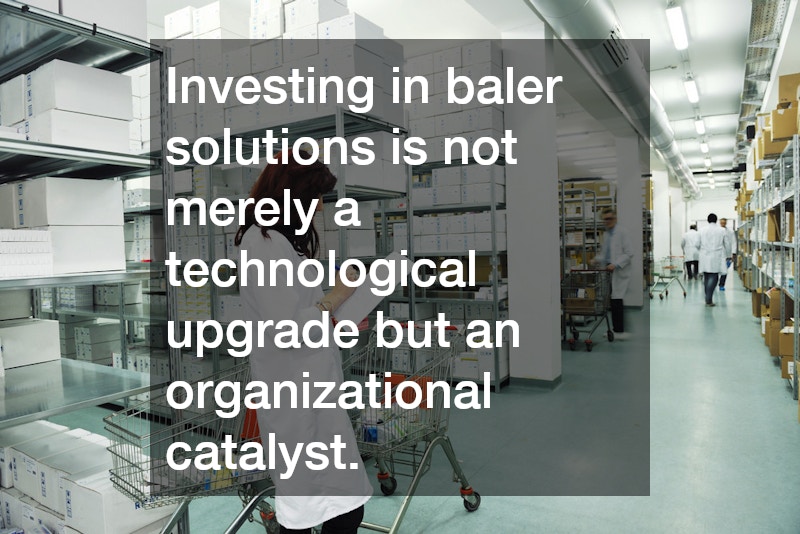
Therefore, investing in baler solutions is not merely a technological upgrade but an organizational catalyst. They are conducive to reinforcing efficiency hierarchies within the warehouse framework while aligning with environmental and safety standards. In a world where efficiency drives competitive advantage, embracing baler solutions is a step towards a proficient and innovative logistical operation.