
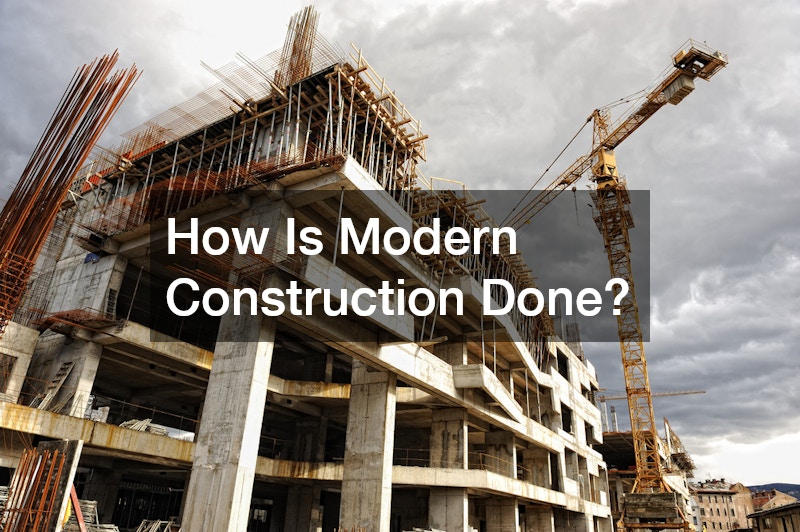
Modern construction is a cornerstone of urban development and infrastructure expansion. It represents significant advancements in building technologies and methodologies, providing solutions to meet the growing demands of urban populations and environmental considerations. These advancements are profoundly changing how structures are designed, built, and maintained, shaping the future of the built environment. Incorporating cutting-edge technologies, such as Building Information Modeling (BIM), 3D printing, and advanced robotics, modern construction achieves more efficient, sustainable, and safer building processes.
This article explores the key elements of modern construction, including its technologies, sustainability practices, challenges, quality assurance measures, and future developments.
1. What are the Key Technologies Used in Modern Construction?
Key technologies revolutionizing modern construction include Building Information Modeling (BIM), which provides a comprehensive digital representation of a building’s characteristics. BIM facilitates collaboration among architects, engineers, and builders, reducing conflicts and improving project delivery efficiency. Moreover, BIM’s ability to simulate different construction scenarios aids in anticipating and mitigating potential issues, leading to fewer delays and cost overruns. 3D printing technology is another innovative tool that enables the creation of complex architectural structures with speed and precision. This technology not only reduces material waste but also allows for designs that were previously unattainable with traditional construction methods.
Advanced robotics is transforming the construction industry by automating labor-intensive tasks, increasing efficiency, and minimizing human error. Robotic machinery, such as autonomous vehicles and drones, is now commonplace on construction sites, capable of conducting site surveys, monitoring progress, and performing hazardous tasks without endangering worker safety. Additionally, the use of virtual and augmented reality in construction is offering new ways to visualize and execute design ideas, providing immersive experiences that can improve stakeholder communication and decision-making processes. Despite these advancements, the integration of these technologies into everyday practices requires significant investment and workforce training.
Furthermore, Internet of Things (IoT) technology plays a crucial role in modern construction by connecting various devices and systems, allowing real-time data collection and analysis. IoT-enabled tools help monitor equipment and environmental conditions, leading to more informed maintenance and operational decisions. As IoT technology advances, its applications will continue to expand, presenting new opportunities for improving construction project management. However, the adoption of such technologies also raises significant concerns related to cybersecurity, as data breaches could have catastrophic consequences for projects. Nonetheless, the potential to enhance efficiency, safety, and sustainability remains an influential driver of technological innovation in the construction industry.
2. How Has Sustainability Influenced Modern Construction Practices?
Sustainability has become a fundamental element of modern construction practices, reflecting a growing awareness of environmental and social responsibilities. Construction companies are increasingly adopting green building standards, such as LEED (Leadership in Energy and Environmental Design), to minimize their environmental footprint and create more resilient structures. These standards encourage the use of energy-efficient materials and construction techniques that lower emissions and reduce resource consumption. Moreover, sustainable construction often incorporates renewable energy sources, such as solar panels and wind turbines, integrating them into building designs to reduce dependency on fossil fuels.
Resource management is another crucial aspect of sustainability in modern construction, with emphasis on reducing waste and promoting the reuse and recycling of materials. The circular economy framework is increasingly being adopted, allowing for the repurposing of demolition waste and promoting the use of sustainable materials like bamboo and reclaimed wood. Water-saving fixtures, rainwater harvesting systems, and green roofing solutions are also being utilized to decrease water consumption and manage stormwater effectively. By prioritizing sustainability, the construction industry not only helps to preserve the environment but also meets the rising demand for environmentally-conscious buildings.
Social aspects of sustainability are equally important, emphasizing the creation of structures that improve occupant health and well-being. This includes ensuring adequate ventilation, natural lighting, and the use of non-toxic materials, which collectively contribute to healthier indoor environments and enhance the living experiences of residents. Furthermore, sustainable construction practices are not just environmentally beneficial; they can also be economically advantageous. Energy-efficient buildings typically have lower operating costs, higher property values, and can attract more tenants, providing a basis for both environmental and financial sustainability. As public and regulatory pressures increase, sustainability will continue to shape the construction industry, driving the development of innovative solutions that meet both present and future needs.
3. What are the Challenges Facing the Modern Construction Industry?
Despite its evolution, the modern construction industry faces several challenges that impact its progress and efficiency. One of the primary challenges is the labor shortage, as the industry struggles to attract and retain skilled workers. This shortage is exacerbated by an aging workforce and a lack of new entrants, particularly among younger generations, who are less inclined to pursue careers in construction. Moreover, the increasing complexity of construction projects requires advanced technical skills and knowledge, which are not always readily available. Companies must invest in workforce development, training programs, and initiatives that appeal to a diverse population to address this issue.
Economic factors also present significant hurdles for the construction industry, including fluctuations in material costs and economic uncertainty. Market volatility can lead to budget overruns and project delays, creating financial strain on contractors and developers. Additionally, the global supply chain disruptions experienced during recent crises have reinforced the need for more resilient sourcing strategies and local alternatives. Navigating these economic challenges requires companies to adopt innovative procurement strategies, build strong partnerships, and continuously monitor market trends to stay competitive.
Regulatory and compliance pressures also remain at the forefront of industry challenges, as governments implement stricter building codes and environmental regulations. Meeting these requirements necessitates continuous adaptation and compliance monitoring, especially as standards evolve. Construction companies must invest in technology and expertise to ensure they meet regulatory demands, which can add to project costs and complexity. However, these challenges also present opportunities for innovation, as companies develop new methods and technologies that support industry resilience and competitiveness in an ever-changing landscape.
4. How Do Modern Construction Companies Ensure Quality and Safety?
To ensure the highest standards of quality and safety, modern construction companies employ a combination of rigorous control systems and cutting-edge technology. Quality assurance begins with detailed planning and design review processes that identify potential risks and quality concerns early in the project lifecycle. Effective risk management frameworks integrate safety protocols with project management tasks, fostering a compliance-driven culture. These strategies are supported by advanced technology, such as drones, which provide aerial surveillance for inspecting construction sites and maintaining safety standards.
Modern construction also relies on standardizing construction processes and materials to ensure quality consistency. The implementation of prefabrication techniques, where components are manufactured in controlled environments before being assembled on-site, significantly enhances quality while reducing errors and construction time. Furthermore, digital tools like BIM facilitate ongoing quality assessments by providing comprehensive data visualization and analytics capabilities. Data-driven insights gathered through IoT devices ensure that construction teams maintain real-time awareness of site conditions, enhancing quality monitoring and proactive safety measures.
To address safety concerns, construction companies are placing a strong emphasis on worker training and safety education. Regular safety briefings, certifications, and compliance training are implemented to equip workers with safe practices and knowledge of emergency procedures. Technologies such as augmented reality (AR) are being used to simulate hazardous scenarios virtually, providing experiential learning in a safe environment. Innovative equipment, like exoskeletons, is being introduced to decrease the risk of strain and injury among workers. These comprehensive safety practices benefit the industry by fostering a safer work environment, lowering accident rates, and ensuring the well-being of all project participants.
5. What is the Future of Modern Construction?
The future of modern construction is characterized by continued technological advancements and a focus on sustainability and resilience. Emerging technologies such as artificial intelligence (AI) and machine learning are poised to revolutionize project management and design optimization by offering predictive analytics that improve efficiency and decision-making processes. AI solutions can automate decision-making through predictive maintenance and resource allocation, increasing the overall efficiency of construction operations. Additionally, innovations in nanotechnology and biotechnology are expected to produce advanced building materials that offer enhanced strength, flexibility, and sustainability.
The smart city initiative is gaining momentum, integrating buildings with intelligent infrastructure and advanced data systems to enhance urban living. The concept of smart buildings, which utilizes IoT to optimize energy use, comfort, and security, is pivotal for future urban planning. Cities embracing smart construction will benefit from integrated systems that respond adaptively to environmental changes and urban needs. The construction industry must continue developing its digital capabilities and embrace cross-sector collaborations to capitalize on these systems and achieve urban resilience.
Finally, the shift towards more inclusive and community-focused construction will transform urban spaces into vibrant, multifunctional environments. Devotion to social sustainability will lead to constructions that prioritize inclusivity by considering accessibility, diverse user needs, and maintaining social equity. The adoption of collaborative building models, like public-private partnerships, will enable community participation and equitable urban development. By focusing on sustainability, resilience, and inclusivity, the future of modern construction will deliver holistic, people-centered solutions with the potential to redefine built environments.
As we have seen, modern construction is a dynamic field undergoing constant transformation driven by technological innovation, sustainability objectives, and evolving societal needs. By integrating emerging technologies, embracing sustainability, tackling challenges head-on, and maintaining rigorous quality and safety standards, the industry is poised to redefine how we interact with the built environment. The future of modern construction promises to deliver smart, resilient structures that support sustainable and inclusive urban living, ensuring that contemporary and future generations can enjoy the benefits of advanced infrastructure and vibrant communities.